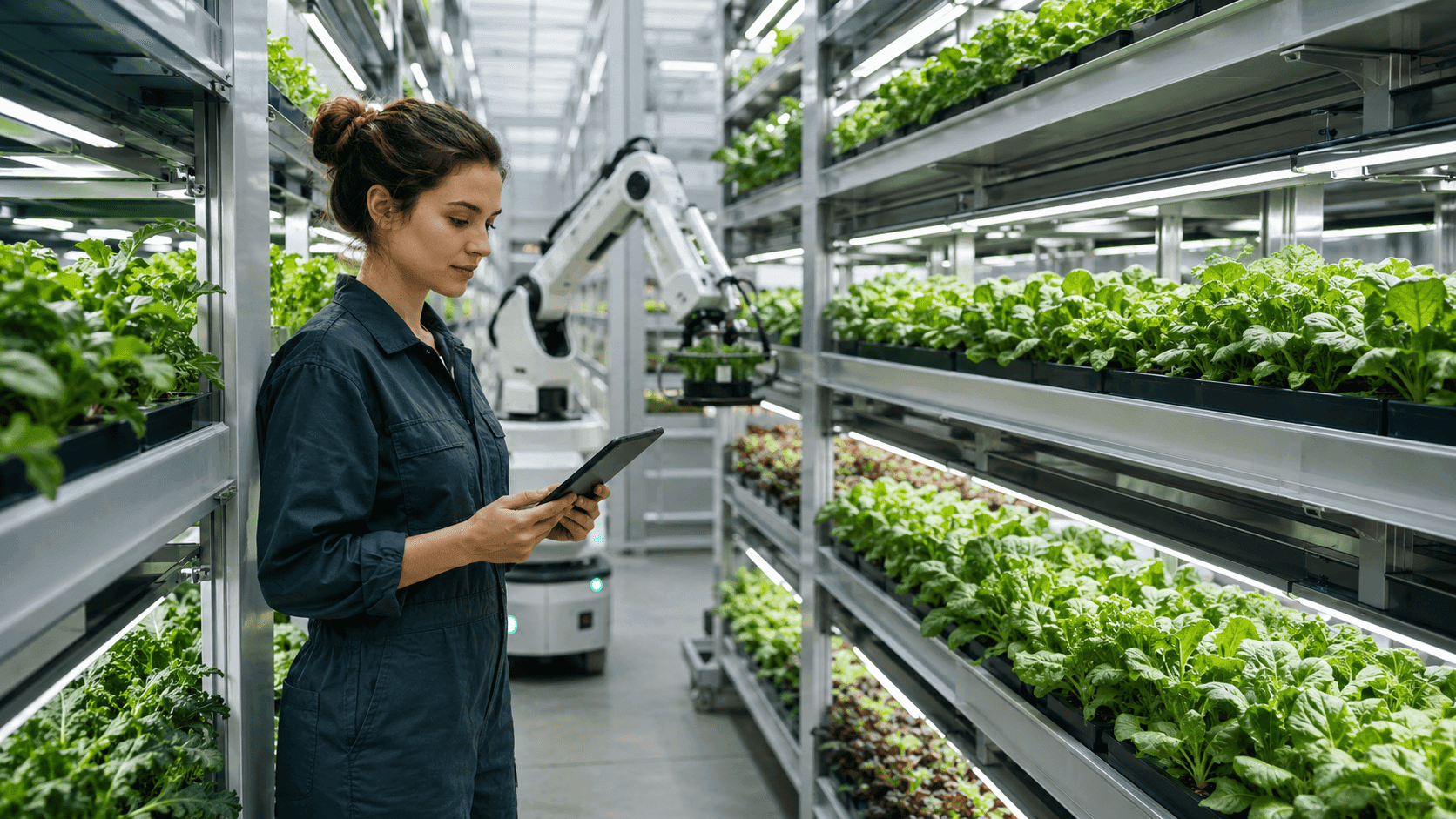
AI-powered vertical farms are helping communities grow fresh produce closer to consumers while reducing water use, transport costs, and exposure to unpredictable weather.
Vertical farms are combining controlled environments with artificial intelligence to grow fresh produce closer to the communities that need it.
Growing more with less uncertainty
Sensors can track light, humidity, nutrients, temperature, and plant health throughout the growing cycle. AI systems then adjust conditions to reduce waste and improve consistency, particularly in regions where outdoor farming faces water shortages or unpredictable weather.
“The value of vertical farming is strongest when it complements local agriculture rather than competing with it.”
The model must solve
- Energy use for lighting and climate control
- Affordable access to equipment and maintenance
- Crop selection suited to local demand
- Integration with local distribution and retail networks

Njeri Mwangi
Content Writer