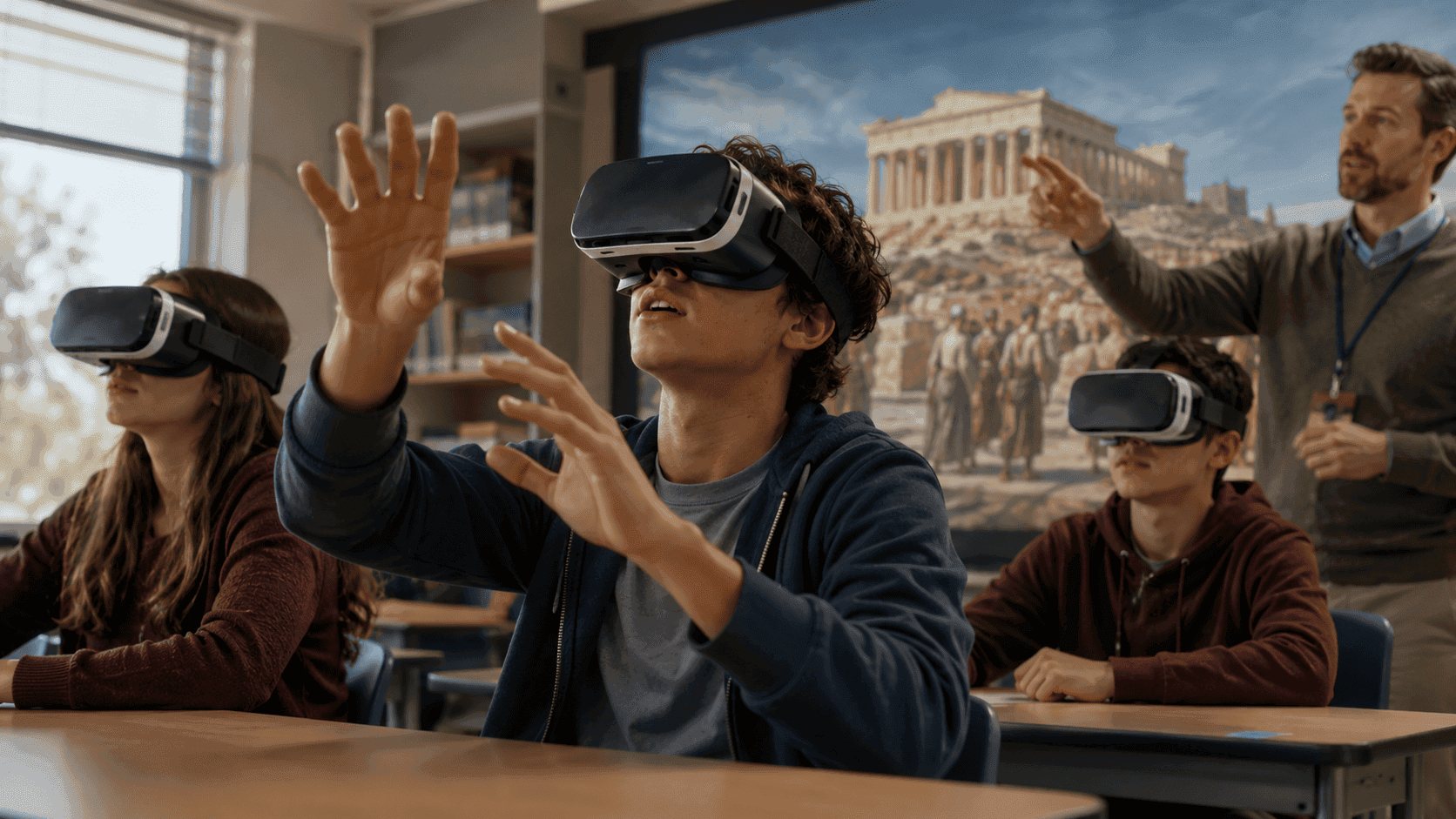
Virtual reality is giving students immersive access to reconstructed historical places, events, and cultures while creating new opportunities for evidence-based classroom discussion.
Virtual reality lessons are giving students a more immersive way to explore historical places, events, and cultural environments.
Learning through presence and interaction
Instead of only reading about an event, students can move through a reconstructed environment, inspect artefacts, and hear multiple perspectives. Teachers can then use the experience as a starting point for discussion, research, and critical analysis.
“Immersion is most useful when it leads students back to questions, evidence, and thoughtful discussion.”
Schools should consider
- Historical accuracy and source transparency
- Teacher guidance before and after each experience
- Accessible alternatives for students who cannot use headsets
- Affordable hardware and shared classroom models

Paul Oluda
Learning Innovation Correspondent